The story of Pawn Realm, from first sketch to playable realm
This is a deliberately compact timeline of how Pawn Realm came together: not a myth, not a press release, just the kind of practical path a chess community project usually takes when one idea slowly becomes a place where people actually play, analyse, and talk.
The honest version is that Pawn Realm did not begin as a finished platform. It began as a list of annoyances: games that felt detached from community, profiles that did not say enough about the player, tournaments that needed too much manual coordination, and live boards that looked useful but not enjoyable.
1. The notebook phase
Early idea: A chess site where the board, the player identity, and the community room felt like one connected place.
The first sketches were modest: a clean board, a right-side move panel, player cards with flags and avatars, and a forum that could hold real analysis instead of throwaway comments. The name Pawn Realm came from that idea of a player starting with one small piece and gradually building a kingdom of games, teams, badges, and rivalries.
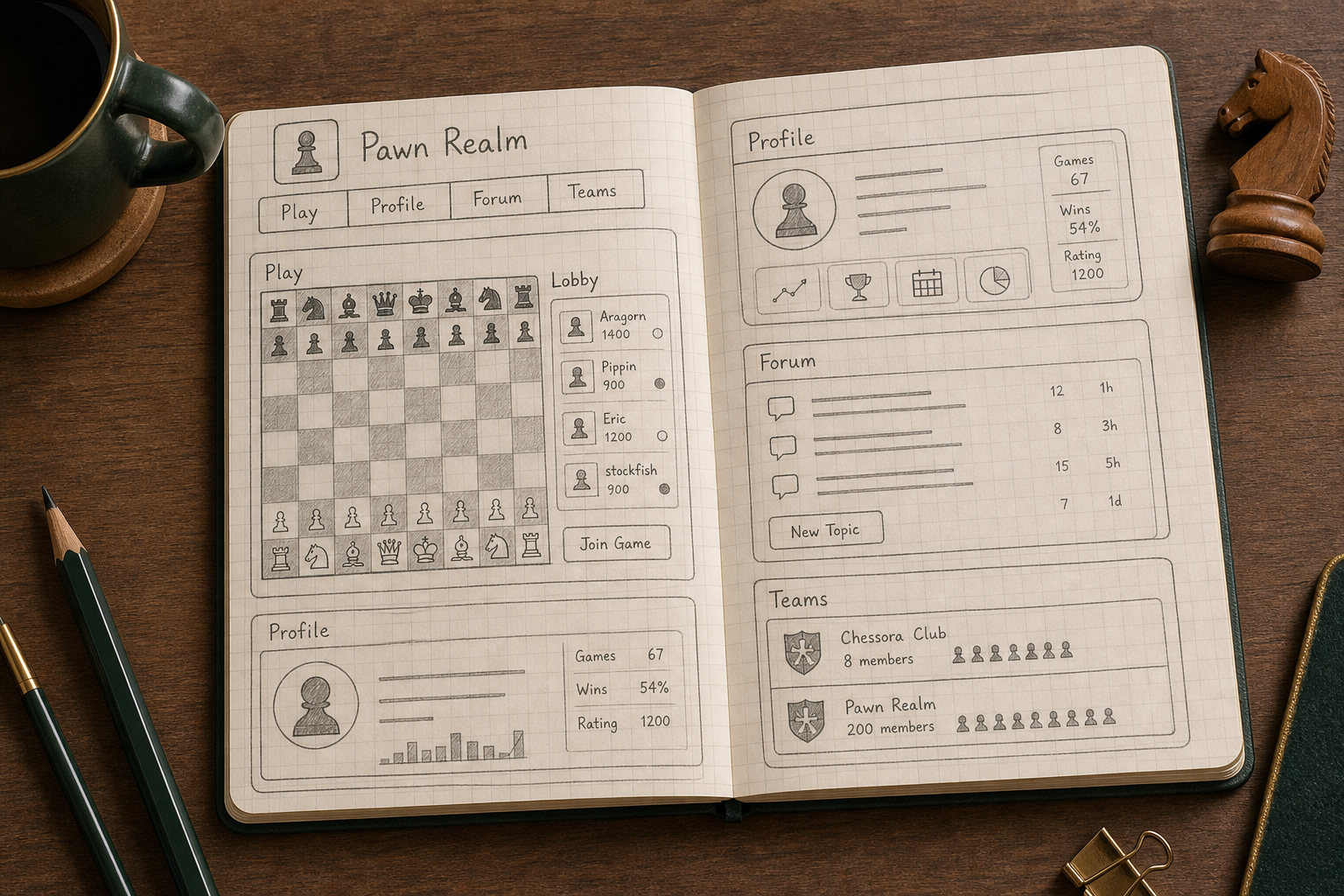
What mattered:
- A board that felt serious enough for long games.
- A profile that gave players a public identity.
- A forum that could preserve lessons, not just chatter.
- A design language that felt chess-first rather than generic.
2. The prototype phase
First playable build: A working board with enough structure to test real games.
The prototype was not elegant. It focused on the uncomfortable parts first: move input, clocks, game state, resign/draw/abort actions, and the right-side panel for moves, chat, info, and openings. The important discovery was that the board could not be treated as a small widget. It had to be the centre of the page.
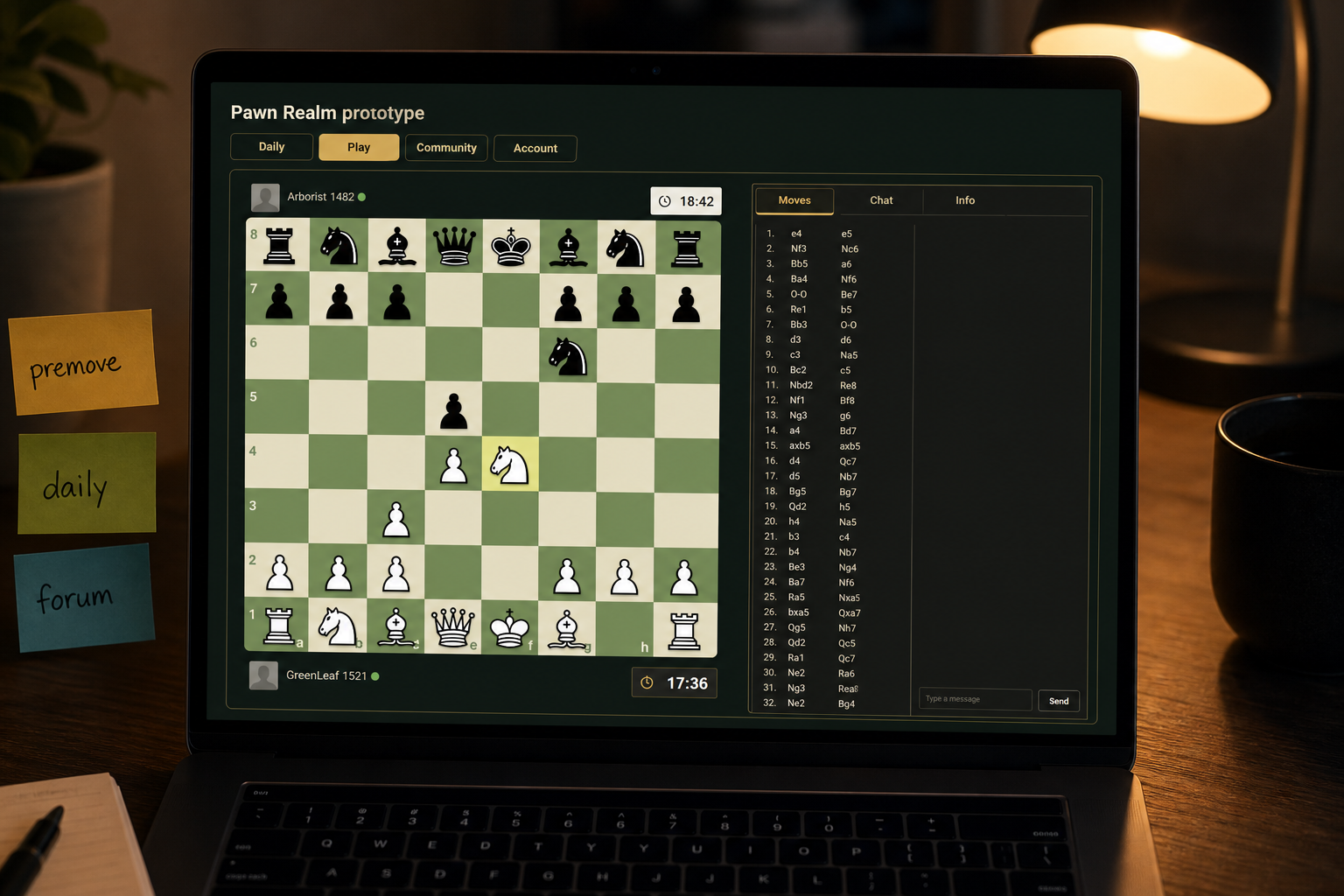
What changed:
- The board became larger and more proportional.
- The move panel became a permanent companion to the board.
- Player identity moved directly above and below the board.
- Bot games were used to stress-test clocks, move updates, and end states.
3. The community phase
Beta direction: Pawn Realm became more than a game board.
Once games were playable, the project needed reasons for people to come back. That is where badges, profiles, national teams, forum reputation, live broadcasts, and daily chess entered the plan. The site started to feel less like a board page and more like a club house: a place to play, watch, discuss, and slowly build a record.
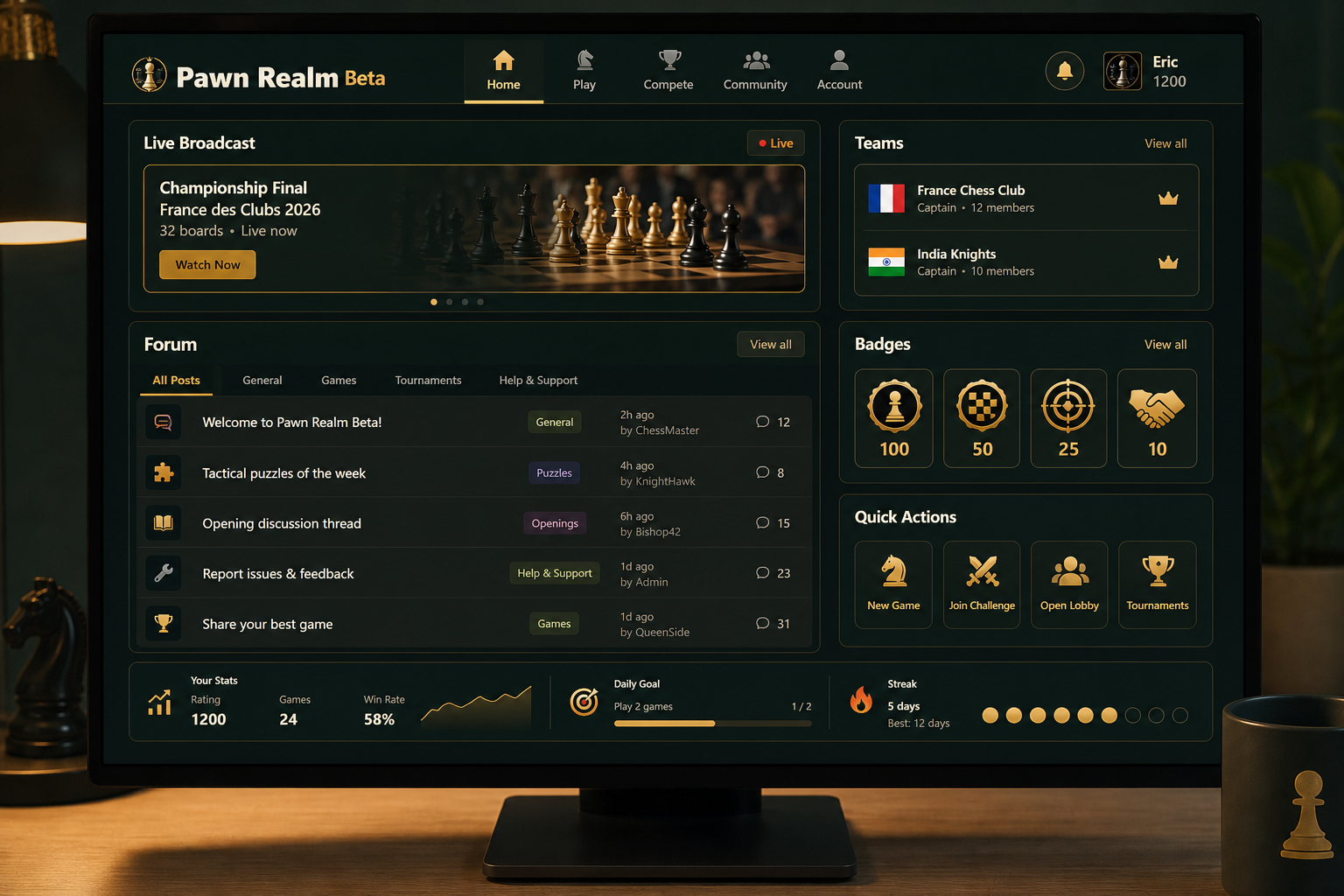
What became important:
- A visible profile history with badges and analysed games.
- National team rooms that could grow into country-based events.
- Live broadcast cards for community events.
- A forum with proper rooms, moderation, and useful long-form posts.
4. The product phase
Current direction: A calmer, stronger playing experience.
The later work has been about tightening the details that players feel immediately: smoother board movement, clearer last-move highlights, better premove behaviour, stronger chat and daily-game tools, a cleaner right column, and player information that is readable without stealing space from the board.
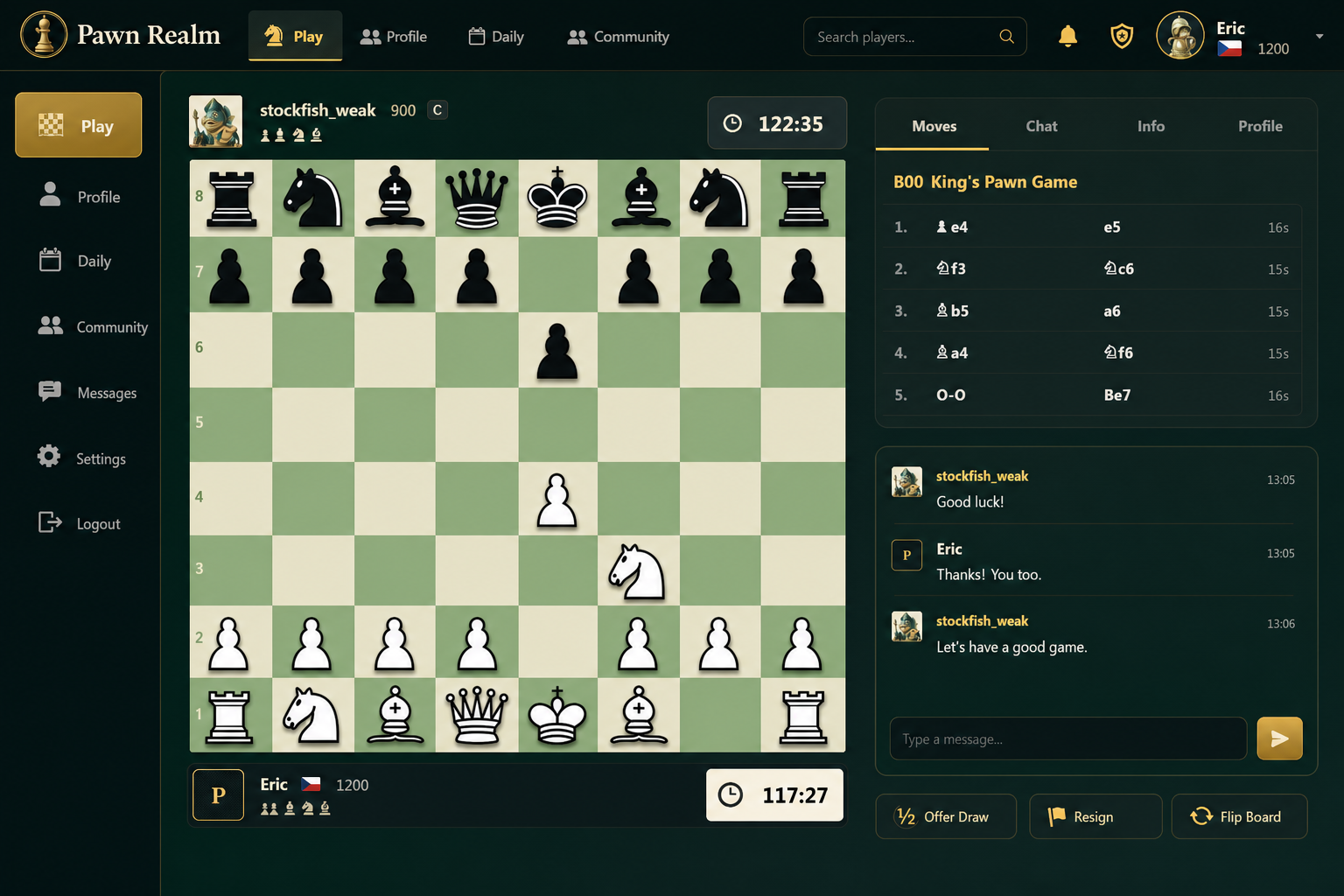
The aim now:
- Keep the board stable and spacious.
- Make live games, daily games, and forum discussions feel connected.
- Let small communities form around teams, streamers, tournaments, and analysis.
- Keep the interface distinctive without making it noisy.
Technical notes
The site grew as a practical web build rather than a single big rewrite. The public pages sit on a Joomla/PHP foundation, with the chess component handling game records, player profiles, forum posts, live broadcasts, national teams, and daily games through database-backed views.
The board experience is mostly front-end work: JavaScript keeps the position, clocks, premoves, sounds, chat state, and right-column tabs responsive, while CSS controls the board proportions, themes, clocks, player bars, badges, and mobile layout. The database stores the durable parts: games, moves, users, ratings, teams, forum topics, messages, notifications, and settings.
The technical direction has stayed simple on purpose:
- PHP for server-side routing, permissions, and saved state.
- MySQL tables for games, forum content, teams, profiles, and notifications.
- JavaScript for board interaction, premoves, live UI updates, chat, and daily-game tools.
- CSS for the Pawn Realm visual language: dark surfaces, gold accents, readable board panels, and themeable chess boards.
- FTP/SFTP deployment for moving tested changes from the local build to the public site.
That mix is not fashionable for its own sake, but it fits the project: easy to host, easy to inspect, and direct enough to keep improving one real player problem at a time.
Where it goes next
Pawn Realm should keep growing in the same practical way: fix the real playing friction first, then add community features only when they support games, teams, study, or events.
The strongest version of the site is not the one with the most buttons. It is the one where a player can arrive, understand where to play, feel who they are playing against, save what they learned, and come back because the place has memory.